Why Most SEO Agencies Accidentally Hurt Their Clients in the First 90 Days (And How to Avoid It)
The first 90 days decide SEO success or failure. Learn the mistakes agencies make early — and how safer execution prevents long-term damage.
LINK BUILDING STRATEGYWHITE-LABEL SEOSEO RISK & BRAND SAFETY
Arghyadip — Founder, Growth Outreach Lab
1/1/20263 min read
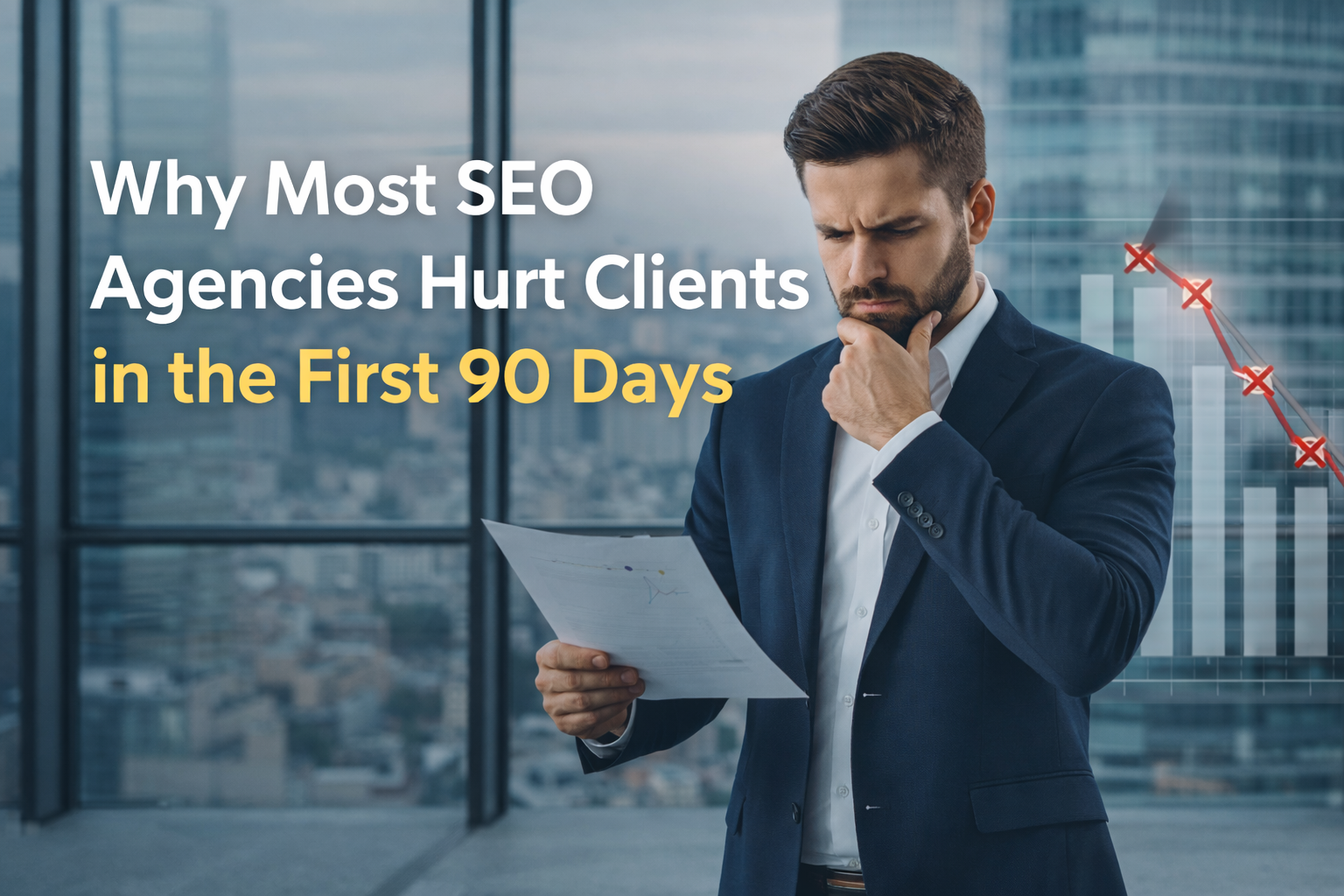

The first 90 days of an SEO campaign are rarely where success is won.
But they’re often where long-term damage quietly begins.
Most agencies don’t harm clients because they’re careless or unethical.
They do it because early decisions are made under pressure — before enough context exists to make safe ones.
This article breaks down why the first 90 days are the most dangerous phase in SEO, where agencies unintentionally create long-term risk, and what a safer alternative actually looks like.
Not theory.
Execution reality.
The First 90 Days Set the Entire Trajectory
Google doesn’t evaluate SEO work in isolation.
It evaluates patterns — over time.
The signals introduced early in a campaign shape how future activity is interpreted:
Link velocity establishes a baseline
Anchor usage sets expectations
Content structure defines topical intent
Internal linking reveals priority signals
Publisher choices influence trust
Once these patterns exist, changing them later is difficult — sometimes impossible without cleanup.
That’s why the first 90 days matter more than most agencies realize.
Mistake #1: Starting With Execution Before Context
Many SEO campaigns begin with action:
keyword lists
content calendars
link targets
deliverable timelines
What’s missing is context.
Without understanding:
how the business actually acquires customers
which pages deserve authority
how competitors are already positioned
what Google already trusts in that niche
execution becomes guesswork.
The result isn’t immediate failure — it’s misalignment.
And misalignment compounds silently.
A safer alternative
Start with discovery before tactics:
map search intent, not just keywords
identify existing strengths before adding new signals
understand where not to push authority
If context isn’t clear, execution speed becomes a liability.
Mistake #2: Over-Optimizing Early to “Show Progress”
Early reporting pressure leads to early over-optimization.
This usually shows up as:
repetitive keyword anchors
too many links pointed at the same page
aggressive internal linking
content written to rank instead of clarify intent
None of this triggers penalties immediately.
Instead, it creates unnatural consistency, which Google flags far faster today than low-quality links.
A safer alternative
Early SEO should look underwhelming:
more branded anchors
more contextual variation
slower link velocity
fewer priority pages pushed at once
Progress in the first 90 days should focus on stability, not visible spikes.
Mistake #3: Treating Link Building as a Standalone Activity
Many agencies separate link building from content and site architecture.
Links are acquired:
without anchor strategy
without internal support
without page-level intent clarity
This turns backlinks into isolated signals — not authority.
Google increasingly evaluates where links land, not just where they come from.
A safer alternative
Every link should be justified by:
page intent
topical relevance
internal linking context
long-term authority flow
If a link doesn’t strengthen a clear content structure, it adds risk instead of value.
Mistake #4: Chasing Metrics Instead of Signals
Early campaigns often rely on surface-level metrics:
DR / DA
traffic estimates
link counts
keyword movement
These metrics look reassuring in reports but don’t reflect trust.
Google doesn’t reward metrics.
It rewards signal coherence.
A safer alternative
Evaluate quality through:
editorial relevance
anchor naturalness
placement context
publisher authenticity
consistency over time
A single misaligned “high-metric” link can do more harm than several lower-profile, relevant placements.
Mistake #5: Scaling Before Patterns Are Proven
The most dangerous mistake happens when something appears to work early.
A few rankings move.
A page climbs slightly.
Velocity increases.
So agencies scale — before confirming whether the pattern itself is safe.
This is how fragile systems are built.
A safer alternative
Before scaling, confirm:
anchor distribution looks natural
link velocity matches industry norms
internal linking supports growth
no publisher footprints are forming
Scaling should amplify validated patterns, not early signals.
What a Safer First 90 Days Actually Look Like
A risk-aware SEO campaign prioritizes:
clarity before execution
intent before keywords
stability before scale
relevance before metrics
judgment before automation
Progress feels slower — but compounds safely.
By the time acceleration begins, the foundation can actually support it.
The Real Cost of Getting the First 90 Days Wrong
SEO damage rarely shows up as penalties.
It shows up as:
stalled growth
volatility after updates
declining trust signals
campaigns that can’t scale
constant “fixing” instead of building
Most agencies don’t realize the cause — because the damage was introduced quietly, months earlier.
Final Thought
SEO doesn’t fail because agencies don’t do enough.
It fails because they do the wrong things too early.
The first 90 days aren’t about winning.
They’re about not losing.
Get them right, and growth becomes predictable.
Get them wrong, and no amount of execution can fully undo it.
Contact
Get in touch
Partner inquiries:
info@growthoutreachlab.com
© 2026 Growth Outreach Lab | Crafted with strategy & intent.
Your Clients Expect Results.
Make Fulfillment the Easiest Part of Your Agency.
Services
Strategy Sample
Our SEO Process